
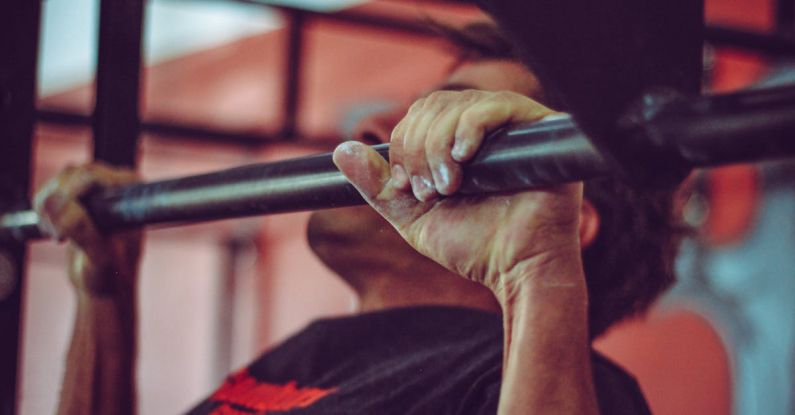
Pull-up training is a challenging but effective workout that can help strengthen your upper body, improve your posture, and increase your overall fitness level. However, despite its popularity, many people make common mistakes that can hinder their progress and even lead to injury. In this article, we will explore some of the most frequent errors in pull-up training and how to avoid them.
Improper Grip Technique
One of the most common mistakes in pull-up training is using an incorrect grip technique. Many beginners tend to grip the bar with their palms facing away from them, known as an overhand grip. While this grip is suitable for some individuals, it can put unnecessary strain on the wrists and elbows, leading to discomfort or injury.
To avoid this mistake, consider using an underhand grip, also known as a chin-up grip, where your palms face towards you. This grip can help engage the muscles in your back and biceps more effectively while reducing the risk of strain on your joints. Experiment with different grip styles to find the one that feels most comfortable and allows you to perform pull-ups with proper form.
Insufficient Warm-Up
Another common mistake in pull-up training is skipping or rushing through the warm-up. Pull-ups require significant upper body strength and mobility, so it is essential to prepare your muscles and joints adequately before starting your workout. A proper warm-up can help prevent injuries, improve your performance, and ensure that you get the most out of your training session.
Include dynamic stretches, such as arm circles, shoulder rolls, and scapular retractions, to loosen up your muscles and improve blood flow to the targeted areas. Additionally, consider incorporating exercises like band pull-aparts or scapular push-ups to activate the muscles involved in pull-ups. Take the time to warm up properly to enhance your overall workout experience and reduce the risk of strains or sprains.
Lack of Progression
Many individuals make the mistake of not following a structured progression plan in their pull-up training. Trying to perform advanced variations or increasing the number of repetitions too quickly can lead to plateaus or overtraining, hindering your overall progress. It is crucial to start with the basics and gradually build up your strength and endurance over time.
Begin by mastering the standard pull-up with proper form before progressing to more challenging variations, such as weighted pull-ups or wide-grip pull-ups. Focus on quality over quantity and aim to increase your repetitions or resistance gradually as your strength improves. By following a well-designed progression plan, you can continue to challenge your muscles and make consistent gains in your pull-up training.
Neglecting Proper Form
Maintaining proper form is essential in pull-up training, yet many individuals sacrifice technique for the sake of completing more repetitions. Common form mistakes include swinging your body, arching your back, or not fully extending your arms at the bottom of the movement. These errors not only reduce the effectiveness of the exercise but also increase the risk of injury.
Focus on engaging your core, keeping your body straight, and pulling yourself up with controlled movements. Avoid using momentum to swing or kip your way through the exercise, as this can shift the emphasis away from your targeted muscles and lead to muscle imbalances. Pay attention to your form throughout each repetition and make adjustments as needed to ensure a safe and efficient workout.
Inadequate Recovery
Another prevalent mistake in pull-up training is neglecting proper recovery and rest. Your muscles need time to repair and grow stronger after a challenging workout, so it is essential to prioritize rest days and incorporate active recovery strategies into your routine. Overtraining can lead to fatigue, decreased performance, and an increased risk of injury, ultimately hindering your progress in pull-up training.
Allow for sufficient rest between training sessions to give your muscles time to recover and adapt to the stress placed on them during pull-ups. Consider incorporating activities like foam rolling, stretching, or light cardio on your rest days to promote blood flow and reduce muscle soreness. Listen to your body, and don’t be afraid to take additional rest days if you feel fatigued or overly sore. Remember that recovery is a crucial component of any training program and can help you achieve better results in the long run.
Inconsistent Training
Consistency is key in pull-up training, yet many individuals make the mistake of being inconsistent with their workouts. Skipping sessions, following an erratic training schedule, or neglecting pull-ups altogether can impede your progress and make it challenging to see significant improvements in your strength and performance. To reap the benefits of pull-up training, it is essential to stay committed and maintain a consistent training routine.
Set specific goals for your pull-up training, whether it’s increasing the number of repetitions, mastering a new variation, or improving your overall form. Create a structured workout plan that includes regular pull-up sessions and tracks your progress over time. Find a training schedule that works for your lifestyle and stick to it as much as possible to develop a habit of consistent training. By staying dedicated and putting in the effort consistently, you can make steady progress and achieve your pull-up goals.
Conclusion: Avoiding Common Mistakes in Pull-up Training
Pull-up training is a challenging yet rewarding workout that can help you build strength, improve your fitness level, and enhance your overall physical performance. By avoiding common mistakes such as improper grip technique, insufficient warm-up, lack of progression, neglecting proper form, inadequate recovery, and inconsistent training, you can maximize the effectiveness of your pull-up workouts and reduce the risk of injury. Focus on mastering the basics, listening to your body, and staying committed to your training routine to achieve long-term success in pull-up training. Remember that consistency, patience, and attention to detail are key factors in reaching your pull-up goals and enjoying a fulfilling workout experience.