
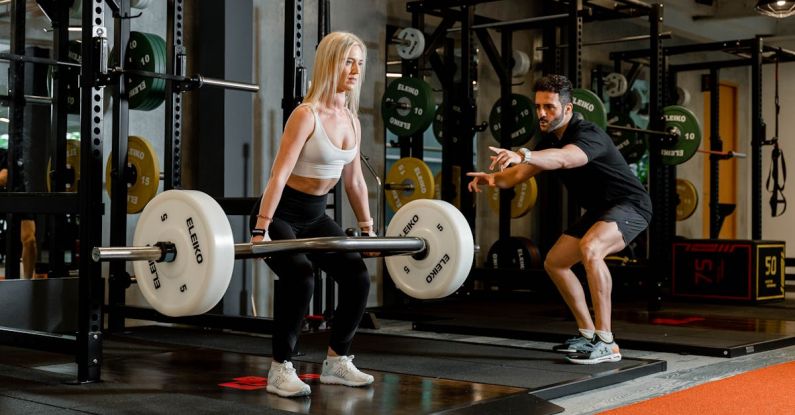
The deadlift is a fundamental compound exercise that targets multiple muscle groups, making it a staple in strength training programs. Proper form is crucial when performing the deadlift to maximize its effectiveness and prevent injuries. Whether you are a beginner or a seasoned lifter, focusing on improving your deadlift form can lead to better results and overall performance in the gym.
Understanding the Deadlift Movement
Before delving into how to improve your deadlift form, it’s essential to understand the mechanics of the movement. The deadlift primarily targets the posterior chain, including the lower back, glutes, hamstrings, and traps. The key components of a proper deadlift include maintaining a neutral spine, engaging the core, hinging at the hips, and using the legs to drive the movement.
Engage Your Core and Maintain a Neutral Spine
One of the most critical aspects of deadlift form is maintaining a neutral spine throughout the movement. A neutral spine refers to the natural curvature of the spine, where the cervical, thoracic, and lumbar spine maintain their proper alignment. To achieve this, engage your core muscles by bracing as if you were about to take a punch. This will help stabilize your spine and protect it from excessive flexion or extension during the lift.
Hinge at the Hips
The hip hinge is a fundamental movement pattern in the deadlift that involves pushing your hips back while maintaining a slight bend in the knees. This allows you to load the hamstrings and glutes while keeping the barbell close to your body. Initiating the lift by hinging at the hips rather than squatting down will help optimize your leverage and reduce the strain on your lower back.
Keep the Bar Close to Your Body
Maintaining a close bar path is essential for an efficient deadlift. As you lift the barbell off the ground, keep it as close to your body as possible. This minimizes the moment arm and reduces the stress on your lower back. Imagine dragging the barbell up your shins and thighs as you stand up, maintaining a vertical bar path throughout the lift.
Use Your Legs to Drive the Movement
While the deadlift is often perceived as a back-dominant exercise, your legs play a significant role in generating power during the lift. To optimize leg drive, push through your heels and drive your hips forward as you stand up. This will engage your quadriceps and help you lift heavier weights more efficiently. Remember, the deadlift is a full-body exercise, so utilize all your muscle groups to perform the lift effectively.
Practice Proper Breathing Techniques
Breathing plays a crucial role in maintaining intra-abdominal pressure and spinal stability during the deadlift. Before initiating the lift, take a deep breath into your diaphragm and brace your core. Hold your breath as you lift the weight and exhale at the top of the movement. This breathing technique helps protect your spine and enhances your overall strength and stability during the lift.
Focus on Progressive Overload and Technique Mastery
Improving your deadlift form is a continuous process that requires dedication and practice. Focus on gradually increasing the weight you lift while maintaining proper technique. Recording your lifts and seeking feedback from a coach or experienced lifter can help you identify areas for improvement and refine your technique. Mastery of the deadlift takes time, so be patient and consistent in your training.
Fine-Tune Your Deadlift Form for Optimal Performance
Achieving optimal deadlift form is a combination of biomechanics, strength, and technique. By focusing on key aspects such as core engagement, hip hinge, bar path, leg drive, and breathing techniques, you can improve your deadlift form and reap the benefits of this compound exercise. Remember to practice consistently, seek feedback, and prioritize safety to make continuous progress in your deadlift journey. Whether you’re aiming to increase strength, build muscle, or enhance overall fitness, refining your deadlift form will set you up for success in the gym.